Every bettor, whether new to sports betting or already familiar with the basics, eventually asks the same question: what are the actual odds of winning a bet? Betting odds are more than just numbers on a screen. They represent how likely an outcome is to happen, and they show how much a bettor stands to win if it does. It’s worth being clear from the start that no betting system, strategy, or “trick” can guarantee a win. Odds are built around probability, not certainty.
Understanding how odds work gives bettors a clearer picture of what they’re actually risking and what they might gain. Once you know how odds relate to probability, you’re in a much better position to read a betting market rather than just guessing at it. This guide breaks down how odds are calculated, the different formats you’ll come across, and what actually affects your chances of winning a bet.
What Do Betting Odds Mean?
At their core, betting odds are a bookmaker’s way of expressing two things at once: how likely something is to happen, and how much you’ll be paid if it does. They aren’t the same thing as pure probability, though the two are closely related.
A sportsbook sets odds based on statistical analysis, expert input, and the betting public’s likely response. Odds shift as money comes in on one side or the other, which is why the number you see on Monday might not be the number you see by kickoff.
Take a team with odds of 2.00. Before any bookmaker margin is factored in, that number implies a roughly 50% chance of winning. The odds aren’t just a payout multiplier; they’re a snapshot of how the market views that outcome at that moment.
How Are the Odds of Winning a Bet Calculated?
If you want to know how to calculate betting odds and turn them into a probability percentage, there’s a simple formula that works for decimal odds:
Probability (%) = 1 ÷ Decimal Odds × 100
Example 1: Decimal odds: 2.00 1 ÷ 2.00 × 100 = 50%
This tells you the market is pricing in a 50% chance of that result.
Example 2: Decimal odds: 4.00 1 ÷ 4.00 × 100 = 25%
Lower odds indicate a higher implied probability, while higher odds indicate a lower one. It’s a straightforward relationship, but it’s one a lot of bettors overlook when they’re chasing a big payout instead of asking what the number is actually telling them.
Understanding Different Types of Betting Odds
Odds aren’t displayed the same way everywhere. Depending on the region or platform, you’ll encounter three main formats.
Decimal Odds
Decimal odds are the standard across most of the world and are especially common on online sportsbooks. They’re popular for a simple reason: the math is easy. Multiply your stake by the decimal number to get your total return, including the stake.
Example: Odds of 1.80 with a ₱500 stake: ₱500 × 1.80 = ₱900 total return
Fractional Odds
Fractional odds are the traditional format used in the UK and show your profit relative to your stake, rather than your total return.
Example: 5/1 odds with a ₱500 stake: ₱500 × 5 = ₱2,500 profit, plus your original ₱500 stake back.
American Odds
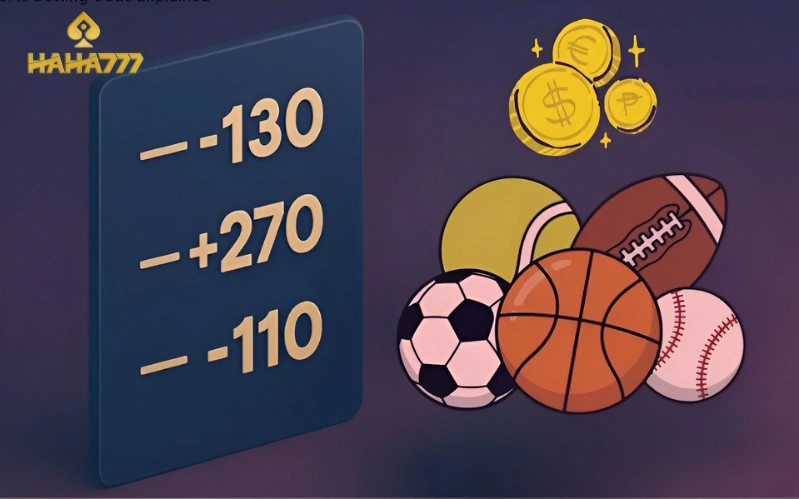
American odds use positive and negative numbers and are the standard in US betting markets. A negative number (like -150) shows how much you need to stake to win 100 units. A positive number (like +150) shows how much you’d win from a 100-unit stake. They can look confusing at first, but once you know which side of zero you’re on, they behave the same way as the other formats.
Odds vs Probability: What Is the Difference?
It helps to separate these two ideas clearly because bettors often use them interchangeably, even though they’re not quite the same thing.
| Odds | Probability |
| Shows potential payout | Shows the actual chance of an outcome |
| Set by bookmakers | A mathematical estimate |
| Includes bookmaker margin | Doesn’t account for margin |
Odds don’t promise anything. They’re a reflection of how likely the market thinks something is, filtered through the bookmaker’s own pricing. Higher odds almost always signal a lower probability, and that relationship holds no matter which sport or market you’re looking at.
Factors That Affect Your Chances of Winning a Bet
A number on a betting slip only tells part of the story. What actually shapes your chances of winning a bet comes down to a few practical things.
Research and analysis matter more than most casual bettors give them credit for. Team form, player injuries, head-to-head history, and even weather conditions on match day can shift an outcome in ways the opening odds haven’t fully caught up to yet.
Market movement is another piece of the puzzle. Odds move before an event starts, often because of injury news, lineup changes, or where the bulk of the betting money is going. Watching how a line moves can tell you almost as much as the line itself.
Betting discipline is the part people underestimate. Chasing losses, betting on emotion, or ignoring bankroll limits will erode even a well-researched approach. Following responsible gambling practices can help bettors maintain better control over their decisions. The bettors who last are usually the ones treating it as a long game, not a single big swing.
Do Higher Odds Mean Better Chances of Winning?
Not really, and this is one of the more common misconceptions in betting. Higher odds mean a bigger potential reward, but they represent a lower implied probability, not a better one.
An outcome priced at 5.00 offers a much larger payout than one priced at 1.50, but it also means the bookmaker sees it as far less likely to happen. Whether a bet is genuinely “good value” isn’t about the size of the odds at all. It’s about whether you believe the real-world probability of that outcome is higher than what the odds imply. That’s the actual skill in betting, not picking the biggest number on the board.
Single Bets vs Accumulator Bets: Which Has Better Winning Odds?
Single bets have a higher probability of winning because you only need one outcome to go your way. The risk is lower, and so, generally, is the payout.
Accumulator bets combine multiple selections into one wager for a much bigger potential payout, but every single leg has to win. Combine three selections at even modest odds, and your overall probability of winning drops fast, even if each pick looked reasonable on its own. It’s the trade-off at the heart of accumulator betting: bigger reward, smaller chance.
How Bookmakers Set Betting Odds
Bookmakers don’t pull numbers out of thin air. Odds come from statistical models, historical data, market trends, and how betting volume is flowing on each side of a market.
Built into nearly every price is a bookmaker margin, or overround. This is why the odds you see are always slightly lower than the “true” implied probability would suggest. It’s how bookmakers build in a margin for themselves regardless of the outcome, and it’s a big part of why no market is ever perfectly fair in a bettor’s favor.
How Odds Work in Online Casino Games
Odds aren’t just a sports betting concept; they apply just as much to online casino games, though the numbers are usually expressed a little differently.
Slots rely on something called RTP, or Return to Player, a percentage that shows how much of all wagered money a game returns to players over the long run. A slot with a 96% RTP, for example, is designed to pay back ₱96 for every ₱100 wagered over many spins. It’s a long-term average, not a promise for any single session.
Table games like blackjack, baccarat, and roulette operate under the odds format covered earlier in this guide. Roulette, for instance, has fixed, known probabilities for each bet type: a straight-up number bet on a European wheel carries roughly a 2.7% chance of hitting, while a bet on red or black sits closer to 48.6%. The house edge is baked into the payout structure itself.
Live casino games blend the two ideas, real dealers and real-time play, but the underlying probabilities behind each bet type remain fixed by the game’s rules.
The common thread across all of these is the same as in sports betting: knowing the odds doesn’t change the outcome, but it does change how realistically you evaluate your chances before you play.
How Haha777 Deals Ensures Fair Betting Odds
Several factors influence sports betting odds, including:
- Team or Player Performance: Recent form, injuries, and historical performance significantly affect betting odds.
- Market Demand: Public betting trends and the volume of bets placed on particular outcomes can influence odds.
- Expert Analysis: Betting experts and oddsmakers use statistical analyses and advanced algorithms to determine fair and accurate odds.
Haha777 Casino Online ensures fair and transparent betting odds by employing a team of experienced oddsmakers and utilizing sophisticated software to analyze sporting events and market conditions. Regular audits and rigorous oversight ensure that Haha777 maintains a fair and trustworthy betting environment, helping players avoid concerns about online casino scams and wager with confidence.
Common Betting Mistakes to Avoid
A few habits show up again and again among bettors who struggle to stay ahead:
- Placing bets without understanding what the odds actually represent
- Chasing high payouts instead of realistic probability
- Ignoring the bookmaker margin built into every price
- Increasing stakes after a loss to “win it back”
- Following tips or predictions without checking them against real data
Avoiding these doesn’t guarantee wins, but it does mean you’re betting with your eyes open instead of on impulse.
Frequently Asked Questions
What Are the Odds of Winning a Bet?
It depends entirely on the implied probability behind the odds you’re looking at. Lower odds usually mean a higher chance of winning, while higher odds reflect a lower one.
How Do You Calculate Betting Probability?
Use the formula: Probability (%) = 1 ÷ Decimal Odds × 100. This converts any decimal odds figure into an implied percentage chance.
Are Higher Betting Odds Harder to Win?
Generally, yes. Higher odds reflect a lower implied probability, which usually means the outcome is considered less likely, even though the potential payout is bigger.
Can Betting Odds Guarantee a Win?
No. Odds are a probability estimate, not a promise. Every bet carries risk regardless of how favorable the odds appear.
What Betting Odds Are Easiest for Beginners to Understand?
Decimal odds are often the simplest starting point because the payout is just your stake multiplied by the odds.