A large fish moves across the screen, and the cannon is already firing. Each shot uses credits, but the target remains untouched. Should the cannon setting change, or is the displayed reward simply making the target look more appealing than it really is?
These are the kinds of questions worth considering when exploring fish table casino games. Their colourful underwater scenes and arcade-style controls can make the action seem straightforward, yet weapon settings, ammunition costs, special features, and reward rules can vary considerably.
Understanding these differences is more useful than relying on supposed winning tricks. The following fish table game tips explain how common features work, which details deserve attention, and why no shooting technique can guarantee a payout.
What Fish Table Game Strategies Can Actually Change
Fish table games combine interactive shooting controls with a reward system determined by the particular game. Some allow manual aiming, adjustable cannons, or special weapons. Others include automatic targeting or features triggered during gameplay.
A useful distinction is between actions you control and outcomes you cannot reliably predict.
You may be able to change your firing direction, adjust a weapon setting, or stop using credits. However, these decisions do not necessarily change the probability of receiving a reward. The result depends on the game’s underlying mechanics, which may include randomised calculations.
The basic fish casino game rules provide introductory information about the format. Here, the focus is on understanding specific controls, credit costs, and the limitations of commonly suggested fish shooting game strategies.
Understanding Shot Costs and Cannon Settings
One of the most important details in fish table games is the cost of firing. A cannon may look more powerful at a higher setting, but that setting can also consume more credits with every shot.
How Cannon Levels Affect Shot Costs
Depending on the game, cannon settings may determine ammunition cost, displayed strength, firing behaviour, or a combination of these features.
A higher setting should not automatically be interpreted as a better choice. Without understanding the underlying reward rules, there is no reliable basis for assuming that spending more credits will produce a favourable return.
Some games explain weapon settings directly on the main screen. Others place details inside a help menu or paytable. If the cost or effect of a setting is unclear, avoid assuming that the visual design accurately explains how it works.
Why Target Value Is Not the Same as Net Return
Consider a hypothetical fish shooting game with these figures:
| Gameplay detail | Example value |
| Cost per shot | 2 credits |
| Number of shots | 20 |
| Total credits spent | 40 |
| Reward received | 30 credits |
| Net result | -10 credits |
Although the target awards 30 credits, the sequence results in a loss of 10 credits because 40 were spent.
This example illustrates how ammunition costs affect the balance. It does not represent the payout mechanics, expected return, or performance of a particular game.
Reading Weapon Settings Correctly
Before interpreting a cannon setting, check whether the game explains its firing cost, available modes, maximum limits, and any conditions attached to special weapons.
A larger weapon graphic or brighter firing effect is not evidence of better odds.
Manual Aiming, Auto-Fire and Target Lock Explained
Different fish shooting game controls can produce noticeably different experiences, even when the games look similar.
Manual Aiming and Fish Movement
Manual aiming lets you direct shots toward moving targets. Fish may travel along curved paths, change direction, overlap, or disappear beyond the screen boundary.
Understanding these movements can make the controls easier to follow. However, a visually accurate shot does not establish that the game will award a catch. Animation and underlying reward determination are not necessarily the same process.
Auto-Fire and Repeated Shots
Auto-fire, where available, repeats shots without requiring a separate input each time.
The convenience comes with an important consideration: repeated firing may consume credits continuously. If the cost is deducted with every shot, a balance can decrease quickly while the feature remains active.
Auto-fire does not guarantee better returns than manual firing.
How Target Lock Works
Target lock may keep a cannon directed toward a selected fish. Its exact behaviour differs between games, and some versions may not include it at all.
| Control | Typical purpose | Important limitation |
| Manual aiming | Direct shots | Cannot guarantee a catch |
| Auto-fire | Repeat shots | May increase credit consumption |
| Target lock | Follow a selected target | Does not ensure a reward |
| Cannon adjustment | Change weapon settings | Higher settings may cost more |
These differences make checking the actual game instructions more useful than relying on universal fish shooting game tips.
Fish Table Power-Ups and Special Features
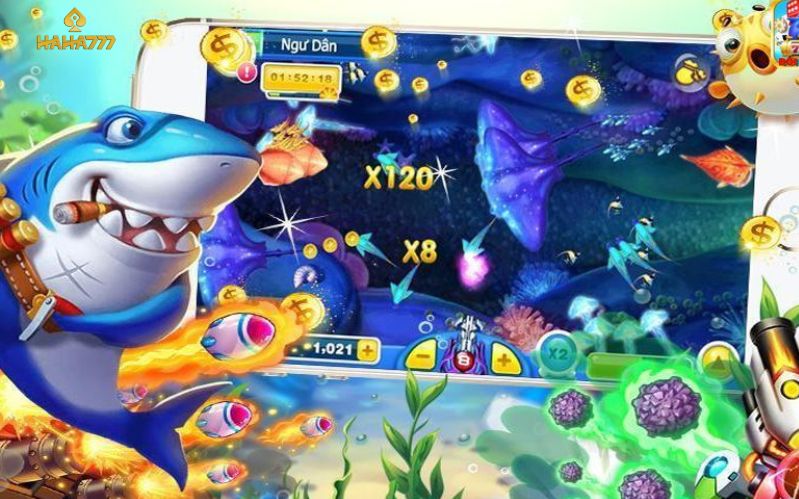
Power-ups introduce another layer of complexity. A glowing weapon, frozen screen, or burst of projectiles may look impressive, but the effect should be understood from the game’s rules rather than its animation.
Freeze, Multi-Shot and Special Weapons
A freeze feature may temporarily stop visible fish movement. Multi-shot can release several projectiles together, while a special weapon may create a different attack pattern.
Not every game uses these features in the same way. Some activate automatically, some require specific conditions, and others may involve additional costs.
Why Power-Up Effects Vary
A freeze effect in one game might last several seconds, while another version could apply only to selected targets.
Likewise, multi-shot does not necessarily mean multiple independent chances of receiving a payout. The game’s calculations determine how the feature works.
Before interpreting a power-up as advantageous, check its activation conditions, duration, cost, and reward restrictions.
Without that information, claims that certain power-ups always produce higher returns are unsupported.
Fish Multipliers, Rewards and Game Rules
Fish table game multipliers can be confusing because a high displayed number does not explain the likelihood of obtaining it.
For example, a target marked with a 50x multiplier may appear more valuable than one marked 5x. However, the displayed reward value alone does not reveal how the game determines successful catches or how frequently each outcome occurs.
It is important to distinguish three things: the displayed potential reward, the cost associated with an attempt, and the probability of receiving the reward.
Game documentation should explain how rewards are determined, what constitutes a winning outcome, and whether special conditions apply.
Fish table games can differ in their reward systems, multipliers, and special features. Alongside checking the game’s own instructions, the official list of approved electronic games can help verify whether a particular title appears among recognised gaming offerings in the Philippines. Approval status does not guarantee specific payouts or explain every gameplay feature.
If a game’s instructions do not explain its reward system clearly, precise claims about the effectiveness of a strategy cannot be justified.
What Changes at Multiplayer Fish Tables?
Some online fish table games display several cannons around one shared underwater scene. Multiple participants may appear to target the same fish while watching a common animation.
This creates an important question: how are rewards assigned?
The answer depends on the game. Shared visuals do not automatically mean shared ammunition, identical reward calculations, or a prize awarded to whoever fires the final visible shot.
Shared Screens and Individual Balances
In some formats, each participant has a separate credit balance and weapon setting. Another person’s activity may be visible without changing your own ammunition costs.
How Reward Rules Can Differ
Multiplayer versions may use different rules for target ownership, special features, and reward allocation.
Avoid assuming that another participant’s apparent success demonstrates a repeatable technique. The screen may not reveal everything involved in the game’s calculations.
Common Fish Table Game Strategy Mistakes
Many supposed fish table game strategies sound convincing because they turn ordinary visual patterns into promises of predictable rewards.
The following mistakes are particularly worth understanding.
| Common assumption | What to consider instead |
| Bigger cannons always pay more | Higher settings may also cost more |
| Boss fish are guaranteed rewards | High displayed values do not establish catch probability |
| Auto-fire improves payout rates | It repeats shots, potentially increasing spending |
| A missed target is becoming easier to catch | Previous misses do not establish future outcomes |
| Timing tricks guarantee catches | Such claims require game-specific evidence |
Treating Visual Patterns as Winning Signals
A fish following the same path repeatedly may appear predictable. Its movement can help explain the animation, but it does not necessarily reveal the outcome calculation.
Claims about secret timing windows, guaranteed headshots, or certain moments when the table becomes easier should be approached with caution.
Increasing Spending After Losses
Another mistake is raising the amount spent in an attempt to recover previous losses.
Doubling expenditure after a loss does not remove the risk of another unsuccessful outcome. Several consecutive losses can increase total spending rapidly.
Confusing Large Rewards With Better Value
A large fish may display a substantial multiplier, but its apparent value says little without reliable information about cost and probability.
The most important distinction is between what the interface shows and what the verified rules actually establish.
Why Demo Controls May Differ From Real-Money Fish Games
Not every fishing game involves gambling. Some are recreational titles featuring rods, lakes, equipment upgrades, or arcade challenges. Others are casino-style shooting games where credits may represent monetary stakes.
These formats should not be confused.
A free demonstration may help explain controls and screen navigation, but it should not automatically be treated as proof of how a real-money version behaves.
The reward rules, available features, and treatment of credits may differ. Even where the visual experience appears similar, that does not establish identical outcomes.
For a broader comparison of recreational formats, the article on different free online fishing games examines fishing titles across mobile devices, computers, and browsers.
Free-to-play entertainment and casino wagering carry different financial implications.
What to Verify About Fish Table Games in the Philippines
Online fish table games in the Philippines may vary in availability, game features, credit systems, and regulatory status. A familiar game title or underwater design is not sufficient evidence that an operator or particular game is authorised.
Haha777.deals includes information about fish-table gaming, but the rules of each game remain the appropriate reference for determining weapon costs, special features, and rewards.
In the Philippines, gambling participation is restricted for people under 21 and certain other groups. Financial limits, avoiding loss-chasing, and recognising harmful gambling behaviour are also important considerations.
Final Thoughts
Useful fish table game tips begin with understanding the rules, not searching for guaranteed wins. Shot costs, targeting controls, power-ups, and reward values all require context. Clear information about these features makes it easier to recognise misleading strategy claims and the financial risks involved.
Frequently Asked Questions
Does a higher cannon level guarantee more fish catches?
No. Higher cannon settings may change ammunition costs, firing characteristics, or other features, depending on the game. A more expensive setting does not automatically produce better results. The actual game rules are necessary to understand how a cannon setting affects gameplay.
Do auto-fire and target lock improve fish game payouts?
These controls can change how shots are directed or repeated, but they do not guarantee improved payouts. Auto-fire may use credits continuously, while target lock generally concerns the selected target. Their effects depend on the specific game’s mechanics.
Can fish table timing tricks guarantee wins?
No verified universal timing trick guarantees catches across fish table casino games. Fish movement and shooting animations may create recognisable patterns, but these do not necessarily reveal how rewards are determined. Claims about guaranteed timing methods should not be accepted without credible, game-specific evidence.
Are all fish table casino games based on the same rules?
No. Fish table casino games can differ in weapon costs, targeting features, multipliers, bonus events, and reward calculations. Two titles with similar graphics may operate differently. Check the instructions for the specific version rather than assuming familiar controls mean identical rules.
Disclaimer: This article is for informational purposes only. Fish table casino games involve financial risks, and no strategy guarantees winning outcomes.